
The Inhibitor That Started It All: How Spider-Man: Brand New Day Quietly Built the MCU's Mutant Saga
A $2-billion crowd-pleaser on the surface — and, underneath, the most consequential piece of table-setting Marvel has attempted since the Infinity Stones. From gene-silencing science to the debut of Mister Sinister, here's how one Spider-Man movie laid the entire foundation for the X-Men.

Spider-Man: Brand New Day arrived as a Tom Holland tentpole and is leaving as something far larger: a hinge point for the next decade of the Marvel Cinematic Universe. The film has already stormed past $2.2 billion worldwide, crossed the billion-dollar mark in a matter of days, and is now poised to knock Titanic out of the all-time global top five. But the numbers, impressive as they are, may end up being the least interesting thing about it. Strip away the spectacle and what's left is a remarkably disciplined act of world-building — a movie that tells a complete Spider-Man story while quietly installing the machinery, the mythology, and the villain for the coming mutant era.
Here is how it did it, point by point.
1. Peter Parker accidentally invents the tool that will cage mutants
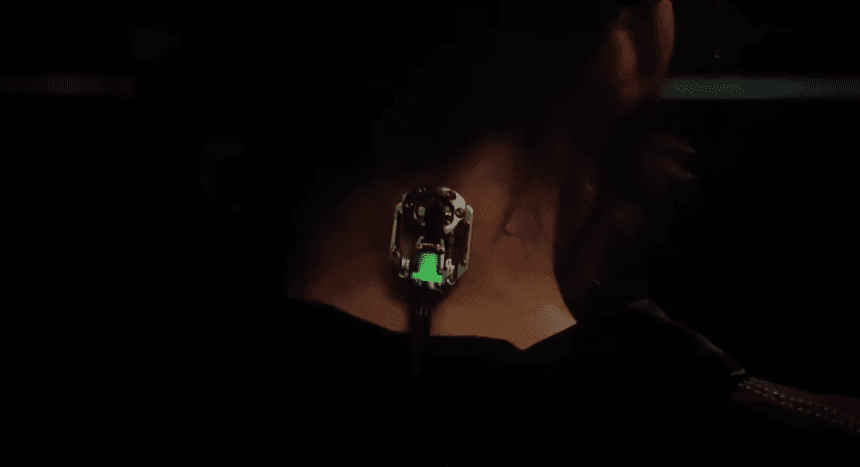
The film's cleverest sleight of hand is disguising franchise foundation-laying as a personal crisis. Peter, wrestling with uncontrollable changes tied to his arachnid DNA — heightened senses, organic webbing, and a dangerous, involuntary self-defense reflex — seeks out Bruce Banner, a man who has spent years learning to leash his own transformation. Banner explains his method: targeted, gene-silencing short interfering RNA that suppresses the specific genetic expression that triggers the Hulk.
That conversation gives Peter his idea. If a single mutation can be identified and silenced, then in theory a universal inhibitor could be built — one capable of recognizing and suppressing many different kinds of mutation. It is a beautifully economical piece of writing: a hero solving his own problem while unknowingly drafting the blueprint for a weapon. In the comics, mutants are suppressed by inhibitor collars built on exactly this principle. Peter, meaning only to quiet the volatile part of himself, has sketched the origin of the MCU's mutant-control technology.
2. Banner's warning is the movie's moral thesis

Brand New Day is smart enough to interrogate its own premise. Banner cautions Peter that a universal inhibitor wouldn't just tame powers — it could be used to control any enhanced being. Then he asks the question the entire mutant saga will eventually be built around: how do you decide which part of a person's nature is good and which is bad? What if the thing you're trying to suppress is the thing protecting you?
It lands because Banner has lived it. He once wanted to be rid of the Hulk, only to be saved by it again and again. And it applies directly to Peter, whose frightening new defensive instinct is dangerous to others yet clearly keeping him alive. The scene reframes the coming human-versus-mutant conflict not as a fight between heroes and villains, but as an argument about acceptance — the same argument the X-Men have always embodied.
3. The consequences arrive before the credits do

This isn't a seed planted for a future film; it germinates within Brand New Day itself. The technology slips into the wrong hands, and the inhibitor is turned on Jean Grey — captured and depowered by the very device Peter built to save himself. Sadie Sink's Jean, introduced here ahead of her leading role in the X-Men reboot, becomes the first on-screen victim of the tech, a chilling demonstration of how quickly a tool of self-preservation becomes an instrument of oppression.
4. Damage Control is no longer just a cleanup crew
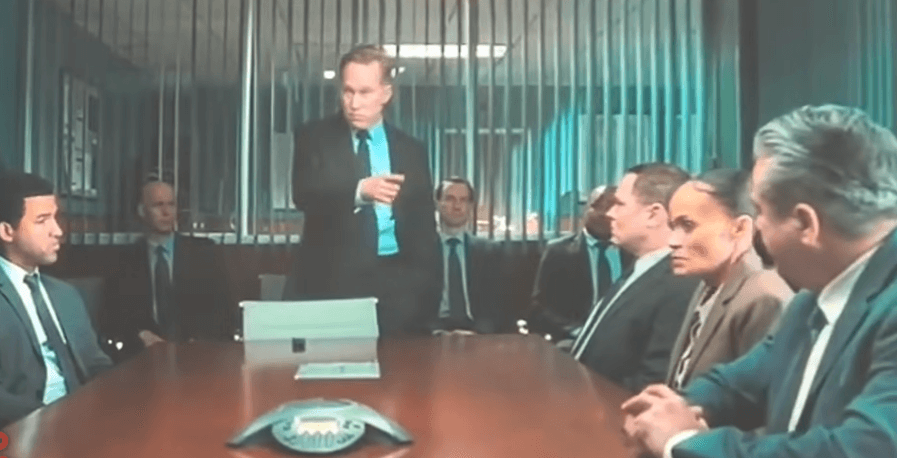
The film escalates the mission creep of the Department of Damage Control, an agency that began as a post-battle regulatory body and has steadily expanded its jurisdiction — a shift teased across recent Marvel television. By Brand New Day, the DODC isn't merely managing aftermath; it's deciding who is too dangerous to walk free, detaining the suspicious and, crucially, taking a special interest in the genetically mutated. When Peter's device ends up in the agency's possession, we watch them begin to study and adapt it. An organization already obsessed with enhanced individuals now has the prototype for suppressing them — and the motive to reverse-engineer it into something wearable and permanent. The inhibitor collar isn't a matter of if anymore.
5. The Grey sisters, and a hunter working from the inside
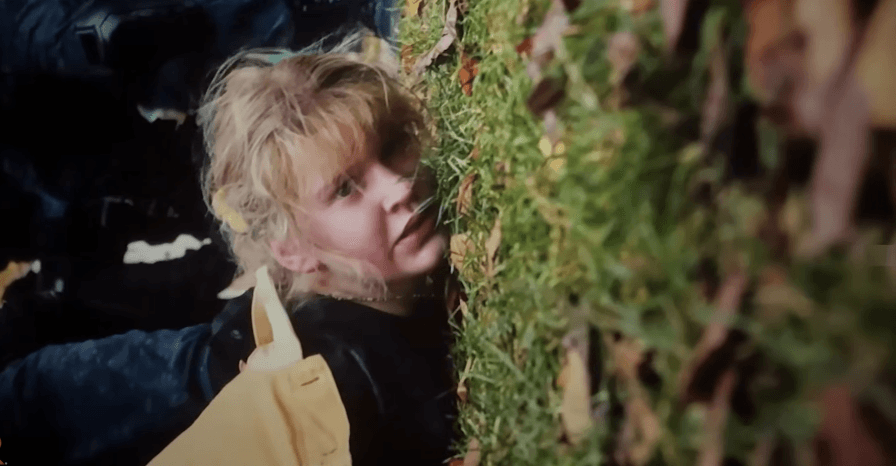
The film's most disquieting thread is procedural. Jean and Sara Grey grew up orphaned, bounced through foster care, and largely off the grid — the kind of history that makes a person nearly impossible to trace. Yet Damage Control found them anyway. That precision implies someone inside the agency whose interest runs past generic "super-powered beings" and straight toward the genetically mutated: someone hunting a specific bloodline. The experiments on Jean reportedly yielded exactly the kind of data — physiological response, brain mapping — that a geneticist would kill for. And that points squarely at the villain Marvel has now made official.
6. Enter Mister Sinister — the payoff hiding in plain sight
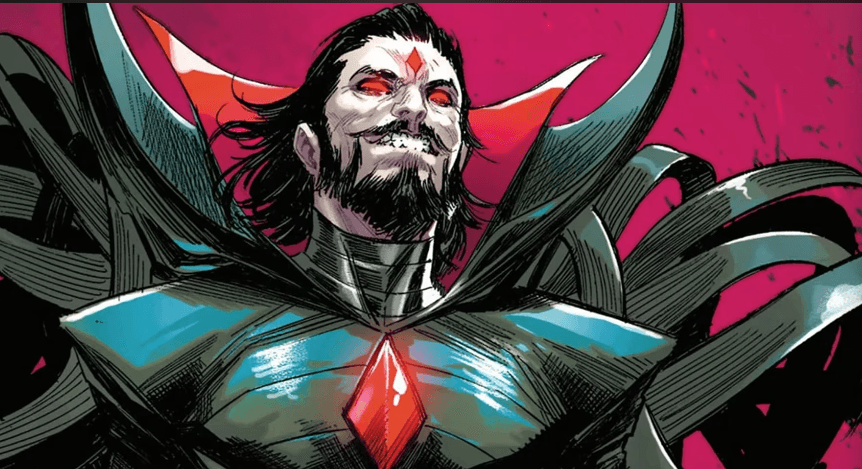
At D23, Marvel confirmed Adam Driver as Nathaniel Essex, better known as Mister Sinister, in an X-Men reboot slated for May 5, 2028 under director Jake Schreier. The casting recontextualizes everything Brand New Day set up. Essex is Marvel's definitive mad geneticist, a man pathologically obsessed with human evolution and mutation, and famously fixated on the genetic potential of Jean Grey and Cyclops. A shadowy scientist embedded in Damage Control, using the agency's reach to trace mutant bloodlines and harvest their data, is not a stretch from that character — it's practically his mission statement.
The film even supplies his upgrade path. With mutant data in hand and a universal inhibitor to study, a figure like Essex has everything he needs to experiment on himself, manifest the powers he covets, and complete the transformation from obsessive scientist into Mister Sinister. Notably, Jean's abilities — telepathy and telekinesis alike — mirror Sinister's own comic power set, making her the perfect template.
7. The hatred that will define an era

Perhaps the shrewdest thing Brand New Day does is manufacture the emotional foundation of the mutant saga, not just the plot mechanics. The public witnesses, for the first time, the raw terror of an unchained mutant — Jean freezing an entire radius of people and objects in place. That fear gives human institutions a pretext, and a willing audience, for cruelty. Meanwhile, the experimentation inflicted on Jean and others is a human-rights violation that will breed exactly the resentment the X-Men mythos runs on. The clash between captor and captive isn't just a set piece; it's the origin of the mutual distrust that anti-mutant zealots — the Trasks and their sympathizers — will spend years exploiting, now armed with Peter Parker's invention.
The verdict

Judged as a blockbuster, Brand New Day is an event — a film closing in on Titanic, already the highest-grossing release of its year, and a genuine crowd-pleaser. But its real achievement is structural. Very few franchise films manage to be complete and self-contained while doing this much load-bearing work for what comes next, and fewer still make the setup feel like character drama rather than homework. By turning a hero's private struggle into the origin of mutant-suppression technology, staging its first casualty on screen, and seeding both the institution and the man who will weaponize it, the movie hands the X-Men reboot a fully built world to walk into.
Marvel has spent years searching for the connective tissue that made its first saga sing. On the evidence of Brand New Day, it may have found it again — hidden, fittingly, inside a Spider-Man movie.
Related Reading

Avengers: Doomsday Full Story Leak Explained: Doctor Doom, Incursions, Loki, Battleworld and More
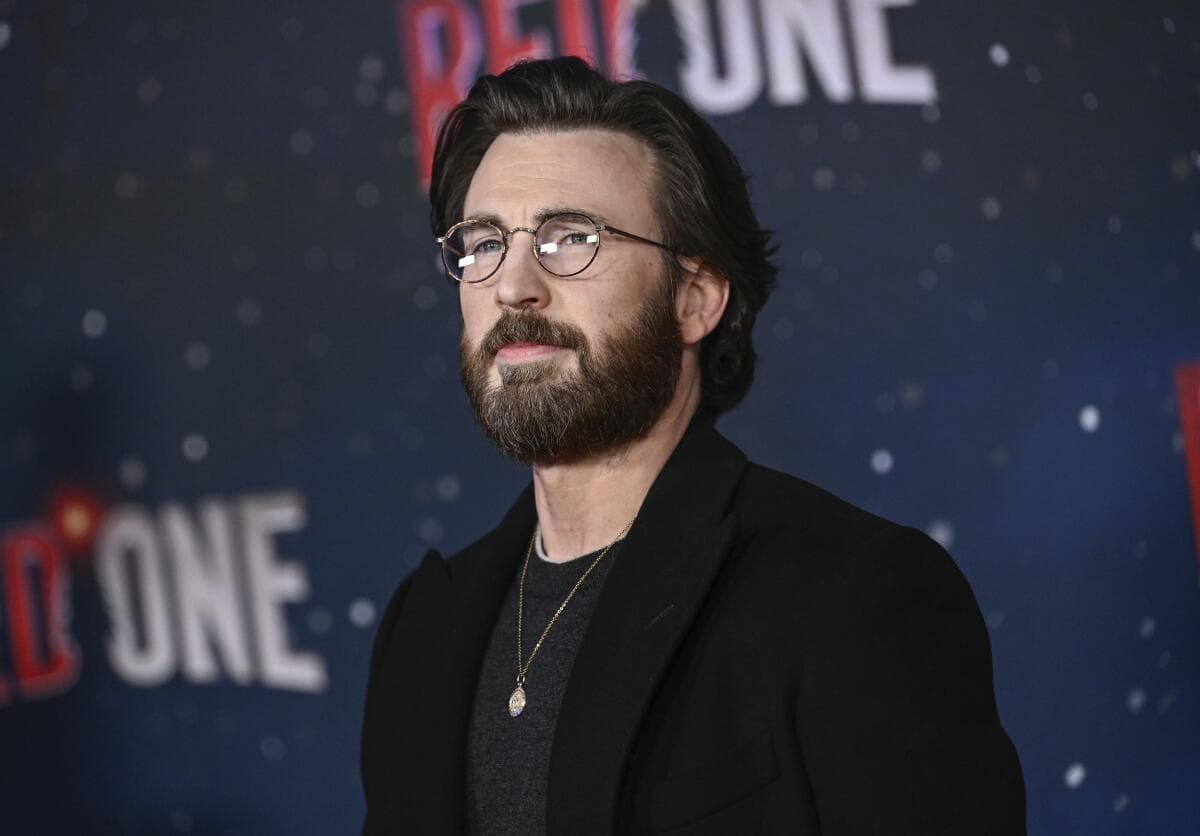
CHRIS EVANS REVEALS WHY HE RETURNED AS STEVE ROGERS FOR AVENGERS DOOMSDAY

Spider-Man: Brand New Day’s Post-Credit Scene Could Be Setting Up Latveria
0 Comments
Sign in to join the discussion.
No comments yet. Be the first.